


[ad_1]

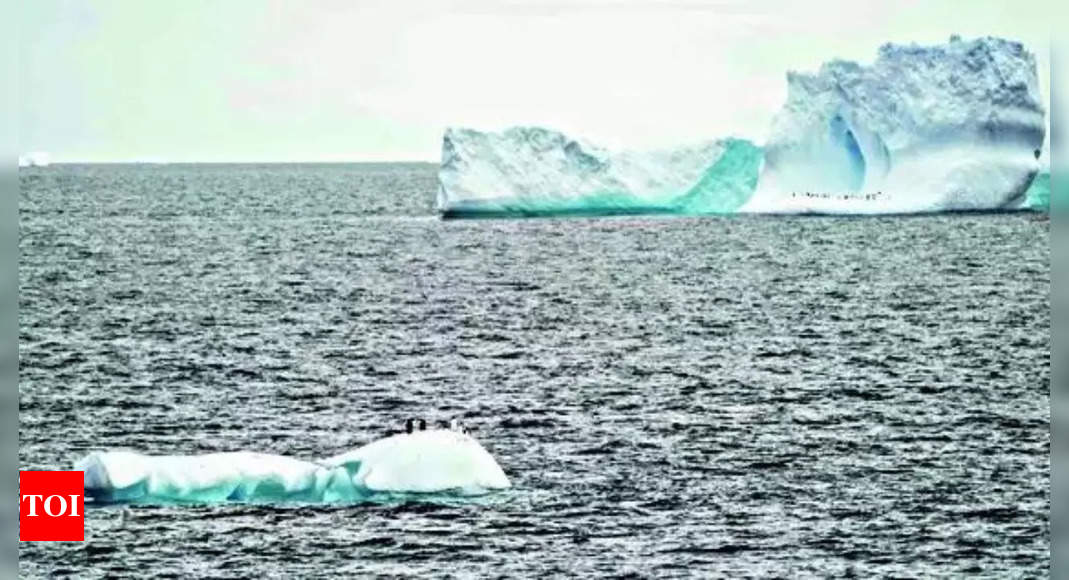
The world’s largest iceberg is on the move for the first time in over three decades, scientists said on Friday. At almost 4,000 square km, the Antarctic iceberg called A23a is roughly three times the size of New York City. Since calving off West Antarctica’s Filchner-Ronne Ice Shelf in 1986, the berg — which once hosted a Soviet research station — has been stranded after its base became stuck to the floor of Weddell Sea.
Satellite images reveal the iceberg, weighing nearly a trillion metric tonnes, is now drifting quickly past the northern tip of the Antarctic Peninsula, aided by strong winds and currents. It’s rare to see an iceberg of this size on the move, said British Antarctic Survey glaciologist Oliver Marsh.
As it gains steam, the berg will likely be launched into the Antarctic Circumpolar Current. This will funnel it toward the Southern Ocean on a path known as “iceberg alley” where others of its kind can be found bobbing in dark waters.
“Over time it’s probably just thinned slightly and got that little bit of extra buoyancy that’s allowed it to lift off the ocean floor and get pushed by ocean currents,” said Marsh.
Scientists say A23a, among the world’s oldest icebergs, could become grounded again or break into smaller chunks, or ever make its way farther up towards South Africa.
Satellite images reveal the iceberg, weighing nearly a trillion metric tonnes, is now drifting quickly past the northern tip of the Antarctic Peninsula, aided by strong winds and currents. It’s rare to see an iceberg of this size on the move, said British Antarctic Survey glaciologist Oliver Marsh.
As it gains steam, the berg will likely be launched into the Antarctic Circumpolar Current. This will funnel it toward the Southern Ocean on a path known as “iceberg alley” where others of its kind can be found bobbing in dark waters.
“Over time it’s probably just thinned slightly and got that little bit of extra buoyancy that’s allowed it to lift off the ocean floor and get pushed by ocean currents,” said Marsh.
Scientists say A23a, among the world’s oldest icebergs, could become grounded again or break into smaller chunks, or ever make its way farther up towards South Africa.
[ad_2]
Source link