


[ad_1]
video sent to dinakar…..
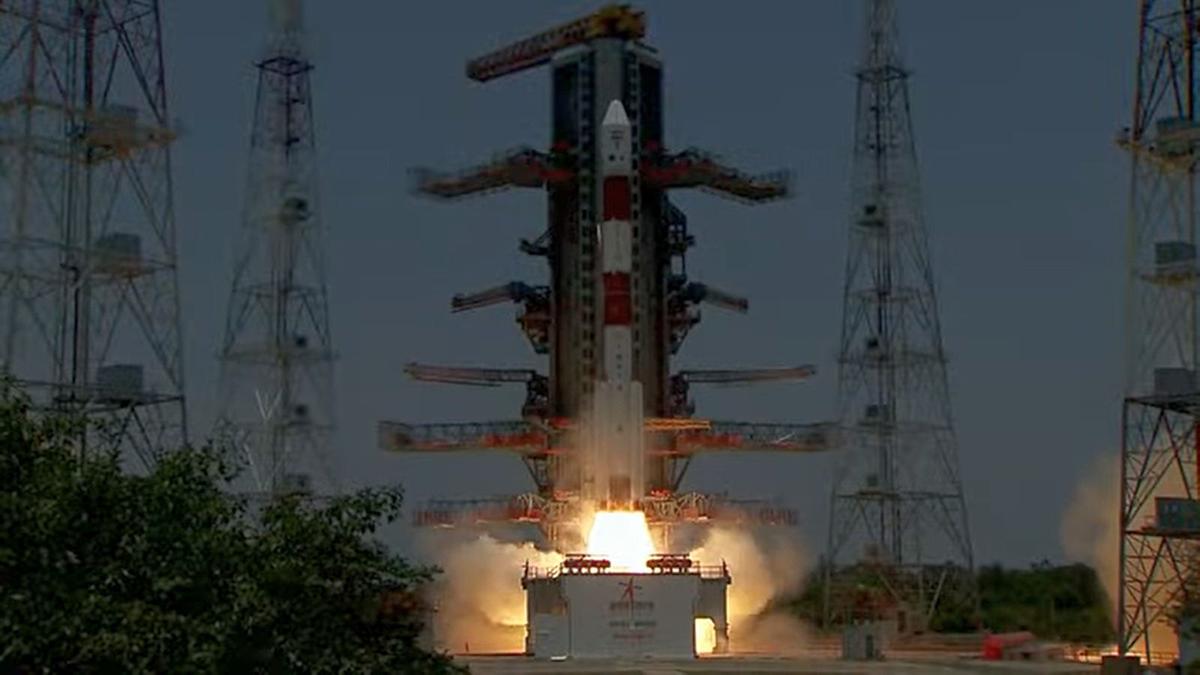
Aditya L-1 launch by ISRO on September 02
Indian Space Research Organisation’s workhorse Polar Satellite Launch Vehicle – PSLC-C57/Aditya Mission had a successful lift-off from the second launch pad of the Satish Dhawan Space Centre SHAR, Sriharikota.
After a successful landing on the Moon recently, the Aditya-L1 mission is to study the Sun. Aditya-L1 is the first space-based observatory-class Indian solar mission to undertake a comprehensive study of the Sun.
At 11.50, the ISRO’s workhorse PSLV blasted off from the second launch pad. On a hot and sunny day, PSLV-C57 emerged behind the trees – as visible from the terrace of the media centre about 3 km from the launch pad – and soared with a thunderous sound in the clear sky. The rocket with its orange flame in its tail left behind thick smoke as it soared.
The 1,420-kg spacecraft (PSLV XL) carried seven payloads to observe the photosphere, chromosphere, and the outermost layers of the Sun (the corona) using electromagnetic and particle detectors. Using the special vantage point of L1, four payloads will directly view the Sun and the remaining three payloads will carry out in-situ studies of particles and fields at the Lagrange point L1.
[ad_2]
Source link