


[ad_1]
The Russian spacecraft on a mission to the moon’s south pole has produced its first results and they are being analysed, Russia‘s national space agency Roskosmos said on Saturday.
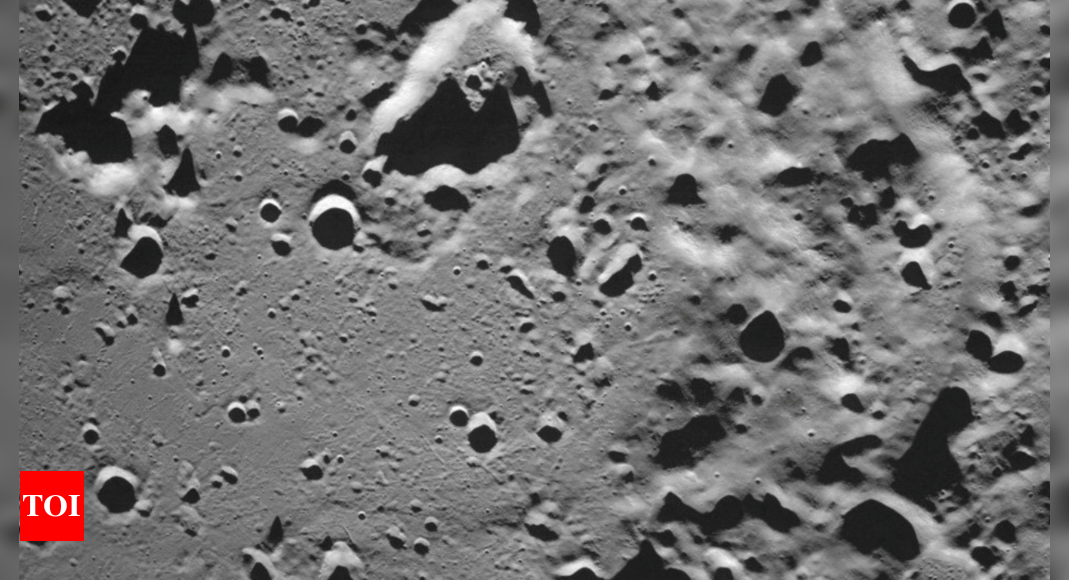
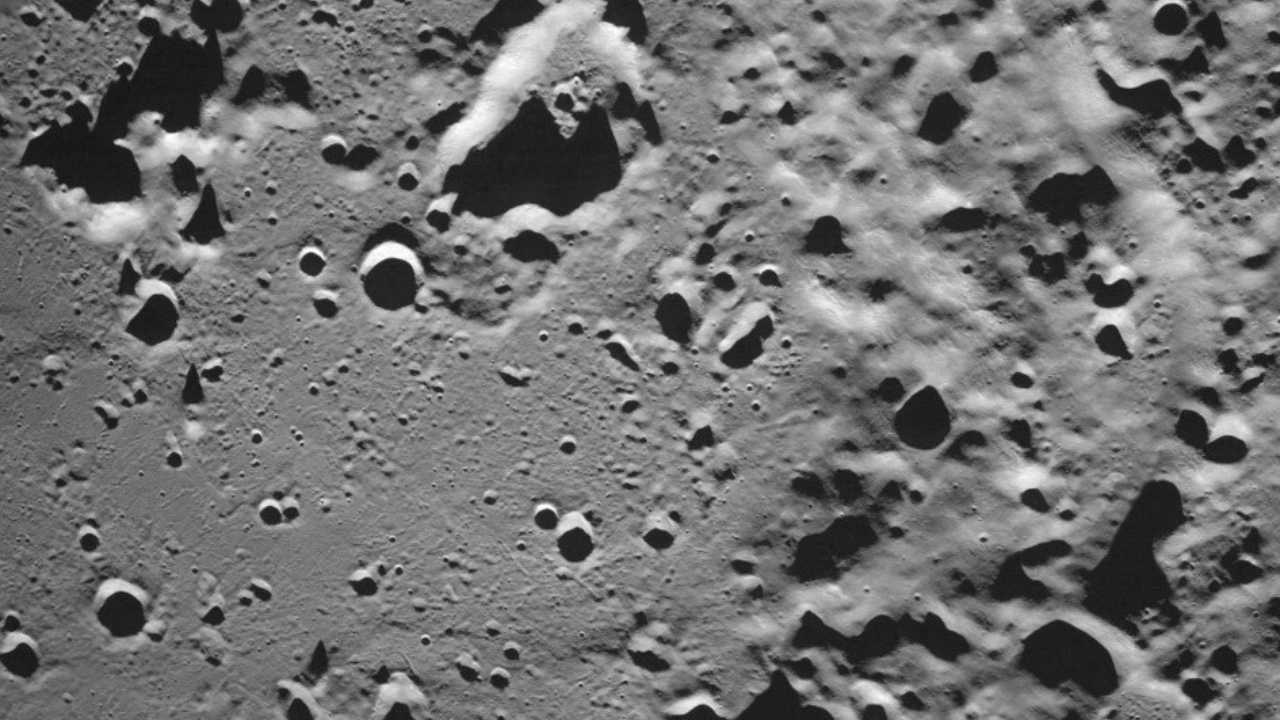
The agency also posted images of the moon’s Zeeman crater taken from the Luna-25 spacecraft, which is scheduled to make a landing on the south pole on Monday after circling the Earth‘s only natural satellite for five days.
The Zeeman crater is the third deepest in the moon’s southern hemisphere, the agency said, measuring 190 km in diameter and eight km in depth.
Roskosmos said data it had received so far had provided information about the chemical elements in the lunar soil and would also facilitate the operation of devices designed to study the near-surface of the moon.
It added that its equipment had registered “the event of a micrometeorite impact”.
The Luna-25 entered the moon’s orbit on Wednesday, the first Russian spacecraft to do so since 1976. Roughly the size of a small car, it will aim to operate for a year on the south pole, where scientists at NASA and other space agencies in recent years have detected traces of frozen water in the craters.
The presence of water has implications for major space powers, potentially allowing longer human sojourns on the moon that would enable the mining of lunar resources.
The agency also posted images of the moon’s Zeeman crater taken from the Luna-25 spacecraft, which is scheduled to make a landing on the south pole on Monday after circling the Earth‘s only natural satellite for five days.
The Zeeman crater is the third deepest in the moon’s southern hemisphere, the agency said, measuring 190 km in diameter and eight km in depth.
Roskosmos said data it had received so far had provided information about the chemical elements in the lunar soil and would also facilitate the operation of devices designed to study the near-surface of the moon.
It added that its equipment had registered “the event of a micrometeorite impact”.
The Luna-25 entered the moon’s orbit on Wednesday, the first Russian spacecraft to do so since 1976. Roughly the size of a small car, it will aim to operate for a year on the south pole, where scientists at NASA and other space agencies in recent years have detected traces of frozen water in the craters.
The presence of water has implications for major space powers, potentially allowing longer human sojourns on the moon that would enable the mining of lunar resources.
[ad_2]
Source link